The Probability of Happiness

So if I have conducted 81 interviews from a pool of 189 applicants, and I have an array of application review scores that ranked the applicants from 1 to 189 to determine which 81 I would interview, and I now also have an array of 81 interview scores ranking the interviews from 1 to 81 to determine which 26 I will select, and if I want to see how strong the correlation is between the application review scores and the interview scores, all I have to do is add up the first array of numbers, find the mean, subtract the mean from each number in the array, square the absolute value of each of those results, add up those results, divide by 81 (the number of numbers in the array) to find the variance, take the square root of the variance to find the standard deviation, repeat this process to find the standard deviation in the second array of numbers, convert each app review score in the first array to a standard unit by subtracting the app review score mean from the app review score and dividing that by the app review score standard deviation, convert each interview score in the second array to a standard unit by subtracting the interview score mean from the interview score and dividing that by the interview score standard deviation, multiply each candidate's app review score standard unit by their interview score standard unit, add up these results and divide that total by 81, (the number of numbers in each array). Simple.

The number I am left with is the correlation coefficient. It will be somewhere between -1 and 1. The larger the absolute value, the stronger the correlation. A correlation close to 0 indicates no meaningful association. A negative number indicates a negative correlation; (i.e. change in the opposite direction, or, the higher the app review score, the lower the interview score). A positive number indicates a positive correlation; (i.e. change in the same direction, or, the higher the app review score, the higher the interview score). Typically, an absolute value less than 0.3 indicates a weak correlation, an absolute value between 0.3 and 0.7 indicates a moderate correlation, and an absolute value greater than 0.7 indicates a strong correlation.

In this particular circumstance I believe I would like to see a strong positive correlation between app review scores and interview scores because I would like to feel confident that I am not leaving strong applicants without an interview, thus with no chance of selection. But I also have to be true to our interview process, (knowing that it is a more thorough vetting), and refrain from artificially inflating correlation, (possibly by including the app review score as a larger weighted portion of the interview score), simply to justify the app review process. So I must work backwards and structure the app review process to more closely approximate the interview process. If I am unable to strengthen the correlation by making solid connections from one process to the next, (and back), then (after a given time that in this circumstance will be measured in years), I will look at simpler criteria that will provide similar correlation with less complexity and less work. Of course the ultimate measure will be the success of those selected; but in this circumstance it is too early to measure this correlation, hence the continued complexity and effort, and the necessity of years.

Interestingly, between these first two years, I see the strongest correlation (between app review scores and interview scores) in the first year. Obviously this indicates that the two selection processes were more proximate in the first year than in the second year. But proximation does not mean they were better. My interpretation is that in the first year we were more instinctive and subjective, (and less experienced), in both the app review process and the interview process, and in the second year we were more consistent and precise in the app review process, but maintained a more subjective (but also more experienced) interview process. As already mentioned, the success of those selected may help to clarify but even that cannot tell us the appropriate mix of perspectives as we cannot measure the performance of those we did not select; and because of the quantity of candidates it may just simply be difficult to select poorly.

Though this is a good problem to have, it does not justify haphazard methods. If anything, it requires more focused diligence to take advantage of this opportunity to select the best of the best. Additionally, a selection process without consistency and measurement may very well produce positive results but if supply and demand change, how will we know what we have done right? To take advantage of the current circumstance we must continue to analyze the data as it comes, to determine if we have had the unfortunate good luck to have stumbled across two or more years of properly executed methods of selection, or the fortunate bad luck to have one process (statistically) distinguish itself.

Because these results are preliminary and premature, we will continue to make incremental improvements and within three to five years I can start playing with linear regression to predict outcomes based on various explanatory variables. But to do this with confidence it is better to be consistent in our subjective terminology and definitions. The end-result app review scores and interview scores, though objectified, are a mix of both objective data and subjective judgement. What I have done, going into this our third year of selection, is to design a rubric that defines the subjective performance measurements consistent with those subjective measurements utilized, (verbally and thoughtfully, if not expressly), and refined throughout our first two years of selection. I had mentioned that our interview process was a more thorough vetting, and it is largely from this process that I have created this rubric originally intending it to serve as a measure of the performance of those already selected. After some epiphanous analysis though, I have adapted this rubric's terminology and definitions to not only serve as a performance measurement, but also to reach back into the interview process and again back into the app review process, and reflect more precisely how our selection process has functioned and evolved. In a sense, I have used hindsight to structure foresight in order to measure the past, the present, and (ultimately) the future. What I must remember is that the present, (this moment), is fleeting; and to claim, (as I did at the beginning of this paragraph), that only "incremental" improvements are necessary from this moment forward, is to allege an arrogant certainty from a potentially devastating height. To prevent this fall, I must also remember that certainty kills effort, whereas uncertainty, as a byproduct of subjectivity, perpetuates effort.

Posted in Philosophy | Leave a comment

Confounded Happiness

He was loud and gruff; like the self-important businessman in the coffee shop on his cell phone arranging a fate-of-the-world-dependent materials delivery. He was amorphous and suffocating; uncoiling his nebulous, weighty tentacles to slither down my throat and heave the life-giving breath from the very essence of my being. He was greedy and insistent; leaving no options but to grovel and beg for the tiniest morsel of consideration and respect. He was pompous and condescending; as if he were a God on Earth---and in this moment, He was.

"I pray." And God answers my prayer with loud, gruff, amorphous, suffocating, greedy, insistent, pompous, condescending, momentary demands. And in the next moment, I pray to a different God. And in the next moment... and in the next moment... and in the next moment...

"I pray every day, all day."

If I don't pray, I am obliged to worship.

If I don't pray and if I question the necessity of worship, I am cast out.

If I am cast out, I am obliged to pray.

It is the Way.

On occasion, if I pray AND worship, I am provided an Answer. And on rare occasion, the Answer (to the consternation of the God) provides sustenance. And on these rare occasions, I am obliged to sing praise... and glory in His miracle... and worship with fervor... and spread the gospel... and pray with piety.

It is the Way.

And the Way is the Word.

And the Word is written in the "Statutes at Large" and in the "United States Code" and in the "Code of Federal Regulations" and in some 50 collections of State Statutes and in innumerable county and municipality ordinances and in case law and in regulatory provisions and in corporate and organizational bylaws and in the eternal ever-after of contractual fine print. Amen.

The Word is Law; and the Law is toothy and monstrous. I can stare it down. And I can speak against it. And I do. But I am not acknowledged. And I am not heard. This smile, that hovers above; that I find so hideous, and frightening; many others, (a great many others), find enchanting; hypnotic; beautiful. Yet many others, (a great many others), are not aware. These many others, (these great many others), do not see the enchanting smile as a smile; and they certainly do not see this same smile as hideous; they see the lips; sexy lips; and they believe it to be the kiss of these lips; but it is not; it is the teeth; only the teeth and they call it, Life. And they are chewed up; happily so. Smack; rip. Yummy.

I am not happy about the teeth. Festive decorations help. A road trip helps. A good meal helps. A purchase on Amazon helps. An array of bruises from my thumb to my elbow as a result of misadventures with a cardiologist and a large gauge needle helps. Distractions. I am still not happy about the teeth. But I am, at least, busy.

This week I am disconnected; unplugged; floating, but still tethered; by choice. And I am, at least, busy; by choice. From my vantage point, I can see the edge. I cannot see over the edge. I can see the edge. The edge is more frightening than the smile; but not more hideous. The edge is more attractive than the lips; but not as sexy. The edge is more dangerous than the teeth; but not as painful. To be chomped; and crunched; and gnashed; is to be necessary. But to work to be acknowledged and heard; to chomp, and crunch, and gnash; to actively hope; and still, at the same time, to be necessary, is to be truthful.

That's all. Truthful.

And I am confident that my truthfulness is filled with inaccuracies; like Newtonian Mechanics as it applies to sufficiently small objects; (from my perspective, I am a large object; from THE perspective, I am sufficiently small); or Ptolemy's theory of Geocentrism; (the World does not revolve around me).

And I am confident that my truthfulness is filled with imperfections; occluded and inefficient like the arteries leading to my heart; careless and hurtful like the angry thoughts and words that on occasion erupt from within; deafening and vertiginous like the tsunami freight train forever circling my thoughts; and misguided and ineffective like our efforts to build character in poor children to level a playing field when the leveling should be focused on eliminating poverty!

Yes, my truthfulness is occluded, inefficient, careless, hurtful, deafening, vertiginous, misguided, and ineffective. And it will always be so. Yet, each time I work to be acknowledged and heard; each time I chomp and crunch and gnash; each time I actively hope; I will gain some ground.

And each time I have to pray; each time I am chomped and crunched and gnashed; each time I stop to stare in disbelief; I am confounded.

And this is progress.

To be confounded, is to be necessary.

To be necessary, is to be truthful.

That's all. Truthful.

Posted in Philosophy | Leave a comment

me-as-Happiness

In more than five-and-a-half years of weekly written thought, it has seldom reflected strictly selfish personal concerns outside of a larger context. And this week I believe I will build to a larger context before I am through, but I will first begin with selfish concerns.

It is early Monday morning, and in an hour-and-a-half I will be checking in at the hospital for a heart catheterization. It will be my sixth cath over the past 7 years. I have been experiencing abnormal chest pain since before Christmas, and it has been increasing in frequency and intensity over the past 4 to 6 weeks. Last week my Wife caught me grimacing and involuntarily clutching my chest, and now here I am. I don't know if they will be adding to my collection of 7 stents, (or if they will be able to), or if the answer and resolution will involve a new experience, or if they will send me home because I am jumping the gun on an issue that is not fully manifested.

I am a bit anxious, and I believe (admittedly or not) that there is always some fear that accompanies uncertainty, but I am, for the most part, calm. For 7 years I have considered the import of my mortality, so in this regard today is merely a magnification.

We will see what comes...

... ... ... ... ...

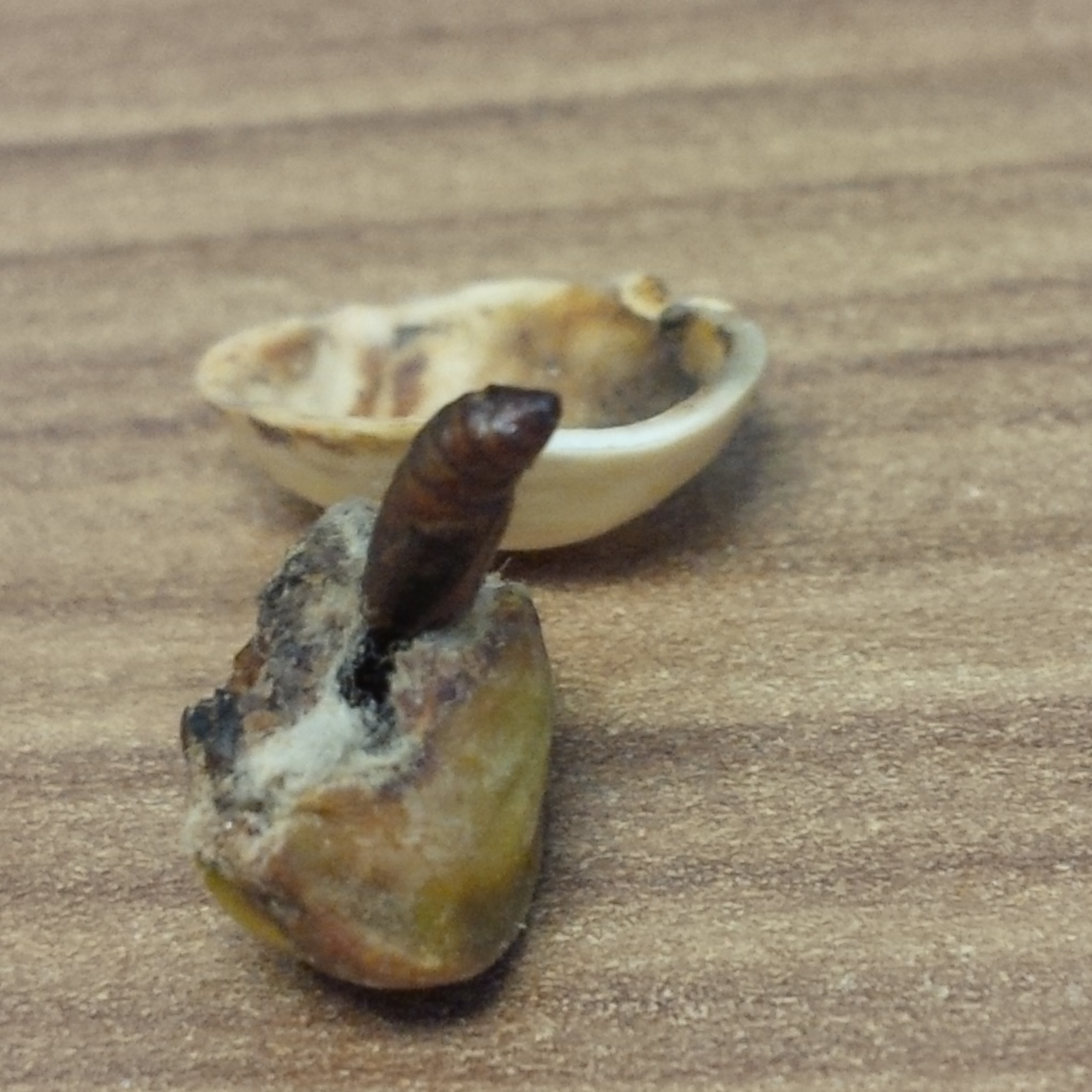
It is Wednesday morning and after heart cath #6 and heart cath #7, I will be going home today. And in addition to Stent #8, here is what I am taking home:

It is difficult to consistently differentiate me as thinker and me as object. It is difficult for me to even consistently explain this difference because as object I am also thinker. These last 48 hours in the hospital have illustrated this dichotomy between thinker and object in a starkly fundamental way; most especially while on the table in the cath lab. In this circumstantial microcosm as presented, I am simultaneously a cold, shivering bundle of exposed disquietude, and a pulsating, trembling mass of imperfect vitality; an observer of bright lights and technological wizardry, and a clogged artery; a receptor of painful stimuli, and a carefully threaded catheter; an audience for the purposeful buzz of a sterile environment, and a shaved groin. As a thinker I perceive; as an object I am perceived. As a thinker I reach out. As an object I pull in. As a thinker I interpret. As an object I am interpreted. As a thinker I choose and act. As an object I repudiate and react.

I will never be a thinker outside of circumstance. And I should never think exclusively as object. To think exclusively as object would result in ingenuousness; (I would be an actor seeking good reviews).

Either way, (as thinker or object), I will never think outside of a context. Some may argue that Pure Thought is possible. I do not, (at least in this moment), agree. I can add complexity to my awareness of these roles by also recognizing others as objects within the context of my perception, and again as thinkers within the context of their circumstance; and additionally as objects once-removed upon their realization that they are object as perceived and interpreted by me. This relationship can be further removed if my perception of another is influenced or determined by the interpretation of yet another.

So in this regard, perhaps all thought must be, (at least to some degree), selfish thought. Am I more selfish as thinker? Or as object? To better clarify this question, I suppose we need to add another complexity to differentiate 1) me-as-object from 2) you-as-object. When I consider you-as-object, I am turning me-as-object inside out in that I am unable to see you as you see yourself seen. In other words, you-as-object will never attain the visceral resonance of me-as-thinker or me-as-object. From my perspective, I believe, (for the moment), that to consider me-as-thinker and you-as-object has more potential for conscious, productive Good than does my consideration of me-as-object. Instead of an extension of thought, (as we see in me-as-thinker and you-as-object), me-as-object involves a ricocheting cavalcade of thought that is typically less relevant and less productive. Yet often, once started, this me-as-object anguish compels or requires continued consideration of this me-as-object perplexity.

Because all three thinker-object dynamics discussed so far are unavoidable, I believe this differentiation and awareness will work toward productive Good. But what about the fourth thinker-object dynamic? What about you-as-thinker?

... ...After some thought, I believe that consideration for you-as-thinker comes after, (but ideally immediately after), consideration for you-as-object. This accompanying consideration is the determinant for either a) the potential for productive Good or b) the lack of productive Good, to be found within and beyond my consideration for you-as-object. When present, consideration for you-as-thinker manifests as a progression along a spectrum beginning with respect and moving through compassion, friendship, a depth of personal caring, and love, potentially leading to productive Good. If consideration for you-as-thinker is not present, obviously respect for the individual is also absent, and productive Good is unlikely.

And with this fourth thinker-object dynamic, (which is in actuality #3A), I can also clear up a nagging inconsistency. As my thought has unfolded, it has bothered me that me-as-object was not more obviously shunned for the seeming desire to be objectified by others. I see now that when I work to see me as others see me I also see me-as-thinker as part of the package; and so I automatically believe that others also see the whole package of #3 (me-as-object) and #3A (me-as-thinker), and consequently afford me all deserved respect; (and therein lies ego). More often than not, this is not the case. Another, considering me-as-object, (which remember, from their perspective, is you-as-object), is very possibly blind to me-as-thinker, (which again, from their perspective, is you-as-thinker). And still others, who may not be blind, see me-as-thinker/you-as-thinker, and either surgically or violently lop it off, leaving only me-as-object/you-as-object. I would do well to consistently acknowledge this reality.

It would be difficult to go through one's day with no consideration for you-as-object, yet I believe it rare that any one of us go through a day without multiple encounters lacking consideration for you-as-thinker. And in the other direction, (pulling in instead of reaching out), I believe it rare that any one of us will go through a day without multiple occasions of consideration for me-as-object (presuming the inclusion of me-as-thinker). I believe it is the degree of this directional disparity that ultimately defines selfishness.

This week my me-as-object time has dwarfed my me-as-thinker and you-as-object time, combined. This week I was an actor playing a part. This week I was selfish.

This week I let you-as-thinker down.

This week I let me-as-thinker down.

Having learned from the past, I will live in the moment, for the future.

Posted in Philosophy | Leave a comment

The Colour of Happiness

In her Memoirs of a Dutiful Daughter, Simone de Beauvoir remembers from her childhood "the luminous sparkle of candied fruits, the cloudy lustre of jellies, the kaleidoscopic inflorescence of acidulated fruit-drops---green, red, orange, violet---I coveted the colours themselves as much as the pleasures they promised me." And as an adult she wrote, "I wanted to crunch flowering almond trees, and take bites out of the rainbow nougat of the sunset."

Algorithm: A set of rules for solving a problem in a finite number of steps.

There are some days when I subtract colour from the world, and I am left with nothing. And that solves many problems.

But then, I add personal thought back into the world, and that adds many problems.

If I am able to add colour back alongside my thought, that solves some problems, lessens other problems, and divides still other problems into smaller constituents, making them more manageable.

And then, if on occasion I am able to follow the rules and perform the steps that result in a perception of personal thought and colour coming to a yin-yang equilibrium, I cheerfully operate as if many problems are solved. But in this circumstance I am cheerfully confused; (until I notice the flowing blood from the harpoon in my thought, and the flowing blood from the other harpoon in colour).

This mixture---the blood of colour and the blood of speciousness---produces a vibrant, viscous, tangy clamor that is somehow perniciously compelling.

This mixture brings clarity; a clarity that with one hand plunges my thought into previously unknown depths of iciness, and with the other hand slits the throat of colour.

With the blood of colour flowing more freely, and the icy depths roiling to the surface, an expansive, exhilarating, and frightening vista of actuality and possibility is exposed. This momentary, volatile landscape is volatile; and momentary.

If I subtract colour from this world, I am left with icy thought; which quickly melts; and evaporates.

And then I must begin again; or not.

Each moment I must choose volatility; or settle for delusion; or fade into nonexistence.

Posted in Philosophy | Leave a comment

Happiness, nonetheless…

I considered first doing some research, which may have made for more enlightened thought, but decided instead to jump right in and muddle my way through. This week I am working to unravel us, them, mine, and yours. I will begin by doing so grammatically. Us and Them are the objective pronouns of We and They; and Ours and Theirs are the respective possessive pronouns of We and They. Me and Mine are (respectively) the objective and possessive pronouns of I; and Her and Hers serve in the same respective capacities for She. But ultimately it is not the grammar that I am wanting to untangle; it is ideologies based on proposed Ideals, and their potential practical and impractical applications.

Here is what I am getting at. (It feels like) I have frequently thought about Us and Them, taking the position that it is a counterproductive dynamic that has outlived its usefulness. So if objective pronouns have become diabolical evildoers, what do we make of their cousins, the possessive pronouns. Are they GREEDY diabolical evildoers? And being possessive, (since I am focusing on mine and yours), does this mean that private ownership has also outlived its usefulness? This may appear to be a leap, but isn't it through grammatical structure that we discern meaning? I realize that this would be an incendiary position to take, awakening ghosts of tyrannies past, but is there a way to practically examine this perspective (of private ownership as obsolete), from outside of or beyond political necessities and implications? To examine practicalities of a new or renewed ideology or proposed Ideal, we must not only seek functionality, but we must also find the potential for improvement in terms of efficiencies and/or results. I am uncertain if it is possible to separate efforts toward practicality from political administration; especially today in the midst of 7,488,945,442 people. And, I know that experience has shown that impracticality and inefficiency are exactly the characteristics that often predominate within any effort to translate ideology into practicalities into political administration. So if I work to simply and objectively administer an Ideal, I am afraid I will end with (at best) a highly inefficient bureaucracy---(yes, much like our current state)---or (at worst) a tyrannical form of totalitarianism; all of course, in my head, as I have no political clout. And it is within this spectrum of objective political administration, (from bureaucracy to totalitarianism), where most of us now reside. Keep in mind that the initial premise I want to examine is the necessity of private ownership. Though it may appear so, I am not championing public ownership (communism), or state ownership (totalitarianism). And at this point in my thought, (and at this point in our thought), an inefficient bureaucracy administering capitalism based on (or posing as) Freedom appears to be the lesser of evils. Nonetheless...

Is there a way to introduce an Ideology based on an Ideal (such as Freedom or No Ownership or The Übermensch), without having it automatically recognized as a past or current misadventure? Is there a way to formulate practicalities outside of our known spectrum of objective political administration? I believe that most of us would instinctively identify said system of thought by its similarities to other disappointing attempts, and jump right to its failed practicalities neglecting or ignoring any merit that might otherwise be culled and refined. I believe that theory (not only) will, (but also must), be entangled with functional practicality, which today means political administration; which in turn implies a power dynamic, thus an initial Us and Them likely leading to other artificially created Us and Them dynamics to maintain existing (or create desired) power constructs. Regardless, I am going to run with these (unpopular) thoughts on the imminent demise of private ownership, to see how far I get. But to capture attention and imagination, I believe any proposed Ideal must in some way, (even a small way), be unique. Not an easy task...

Because I am still stumbling in the dark, I want to better understand this spectrum of objective political administration that I keep mentioning. I believe most of us would have more faith in an objective truth than in a subjective truth; and this is why a political ideology must work toward an objective administration, as opposed to a dictatorship for example, which utilizes a subjective administration. In some cases, such as the Totalitarianism of Nazi Germany in the 1930's and 40's, the basic belief, (non-Jewish Caucasians are the only ethnicity fit to continue), is flawed, but the logic that flowed from this premise was believably compelling. One either was or was not, and based on this division, decisions and actions fulfilled (so-called) preordained destiny. In other cases, such as the U.S. today, the noble Ideal of Freedom must be protected by rules and regulations, which in turn justify decisions and actions, further necessitating rules and regulations. This quest for large-scale objectivity has (at best) divided and (at worst) terrorized; (yet these objective efforts still have more potential for longevity than do subjective efforts). So though objective administration is preferred over subjective administration, it still calls for improvement. And, private ownership of property being tangibly objective and all tangled up within this spectrum of objective political administration must also be included in a plan for improvement. But I am still fumbling for an answer...

So, to be able to move forward, for the moment I will believe that I have swayed a majority to accept the Ideal of No Ownership, removing one facet from, (thus weakening), the Us and Them dynamic. From here, what would a political ideology look like? And from there, how would that translate into a system of objective political administration that would improve on efficiencies and results? These are two very big questions.

First, The Political Ideology:

Within my limited understanding, the ideology I am beginning to formulate is in the neighborhood of Socialism, perhaps leaning toward Social Democracy, with maybe a dash (or two or three) of Mutualism, a sprinkle of Activism, and a pinch of Anarchy. But somehow I would like to differentiate between community or public ownership and no ownership, and I would like to simplify, and I would like to avoid explosive terminology. An Ideology typically involves an -ism and when combining elements from multiple existing ideologies a hyphen may also be included. With all this in mind, (and because Mutual-Social-Demo-Activanarchism is cumbersome and mostly inaccurate), I will call this proposed system of political thought, None-the-lessism. Not only is it catchy and inoffensive, but in many ways it is an accurate portrayal of my efforts to dethrone divisive power dynamics despite their presence and influence throughout recorded history. It is accurate because my efforts are not the lesser of a) my efforts and b) nothing. What is there to lose? Enough is enough! As Pierre Joseph Proudhon (1809-1865) said,

"Then if we are associated for the sake of liberty, equality, and security, we are not associated for the sake of property; then if property is a natural right, this natural right is not social, but anti-social. Property and society are utterly irreconcilable institutions. It is as impossible to associate two proprietors as to join two magnets by their opposite poles. Either society must perish, or it must destroy property."

In context Mr. Proudhon is referring to private (or unmovable) property such as land. I agree with this distinction and believe that personal (or movable) property may be subject to ownership.

To this end, another quote. This one from Jean-Jacques Rousseau in 1754:

"The first person who, having enclosed a plot of land, took it into his head to say 'this is mine' and found people simple enough to believe him, was the true founder of civil society. What crimes, wars, murders, what miseries and horrors would the human race have been spared, had someone pulled up the stakes or filled in the ditch and cried out to his fellow men: 'Do not listen to this impostor. You are lost if you forget that the fruits of the earth belong to all and the earth to no one!'"

(The Rousseau quote was also used in this previous thought: Uphill Happiness from April 16, 2016.)

So if No Ownership of private property is the linchpin, I believe a second major characteristic, and logical follow-up, would be more evenly distributed opportunity which would translate to more evenly distributed power which would translate to (yes, like-it-or-not) more evenly distributed wealth. This is a good starting point. Other characteristics of none-the-lessism would naturally follow from the implementation and administration as outlined in the next section.

Now, The Political Administration:

To do this justice, I believe we would need to fast-forward 50 years beyond full implementation, and then come back to the transition; but to avoid conjecture on new technologies that may be introduced in the next 50 to 100 years, I will instead introduce none-the-lessism as if it were fully implemented and functional tomorrow. I would also like to imagine this as a worldwide initiative, though I believe it feasible on a national scale. Here goes...

When I venture up and out in the morning, I will not see any immediately noticeable changes. Everything that has happened, has happened behind the scenes. I will still find my tomato juice in the refrigerator, my pistachios (roasted and salted) in the pantry, and my car in the driveway. I will still go to work and screen college applications based on merit as I always have. I will still have a variety of choices for lunch and for my afternoon coffee, and I can still go by the grocery store after work to choose something for dinner. At home tomorrow evening I will still have the same programming selections from the dish provider I had previously chosen, and I will still be able to surf the Web or read my book while keeping an eye on the basketball game.

If next week I decide I want to job hunt, I will do so in the same manner I would have last week. If this summer I decide that I want a newer vehicle, I will shop (for it and the loan) as I would have last summer. If I am a renter and in two years I have tired of mowing 3 acres, I can house-hunt in the same way I would have two years ago. All of the market mechanisms, with the single exception of real estate, will remain in play, but based on the behind the scenes changes, they will have become more efficient because greed and power will have considerably less influence. Here is how:

1. No one owns private property. All land, buildings, public services, and businesses are still subject to appropriate protection of assets as provided by existing business, political, and governmental systems, but on paper they are unowned entities. If I previously owned my home, I am now a renter: (much like I am renting this physical body and my current existence). If I previously owned a business, I am now its managing partner. These considerations will be explored in more detail below.

2. Currency has become electronic Parity Dollars. Each one of the 7,489,636,968 individuals in this world (in this moment) receive their share of the world's wealth (paid weekly) from the considerations and factors as calculated on the wealth rubric; (outlined below). There is less "Old Money" or "Family Money" as much of it has been contributed to the world's wealth in the transition period (as explained further below). Because all rents and business profits now go to the world wealth bank, there are no taxes. Any business concern that was previously required to produce budgets, balance sheets, etc., (including public utilities, and cities and towns), must continue to do so. Any business concern not showing a profit for multiple consecutive years will be subject, (following stringent, to-be-determined guidelines), to restructuring and or forced bankruptcy/closure. Healthcare insurance and personal liability insurance for each individual will be required.

Wealth Rubric: An individual's Parity Salary will be paid on the factors below as calculated from the previous calendar year, (except for # of Household Members which is a more immediate adjustment); though the new salary will be paid (on a 3 month delay) from April 1 through March 31. Age, Years of Education, and Level of Education will be calculated according to the status on December 31. Changes in employment status will be calculated accordingly by percentage of year spent in each job. Death will be prorated for the entire year and evenly distributed to the other Household Members, and Household Member status will be adjusted on the first day of the following month after 30 days.

Parity Salary Factors: In order to have a number from which to calculate, for our purposes now, the Base Parity Salary is calculated as an average of the "Purchasing Power Parity" from average annual wages in US dollars across a sampling of 30 countries in 2015. This number is $38,395.00. Unless otherwise stated, all percentages below are calculated from this Base Parity Salary. For purposes of profit and loss, the business concern pays for all Job Factors below, and the world wealth bank takes deductions and pays for all non job factors below.

  • Age: 0 - 17 (or age of legal emancipation) = 25% distributed (evenly) to the legal guardian(s). Age of legal emancipation - 20 or 18 to 20 = 50%. 21 - 29 = 75%. 30-39 = 80%. 40 - 49 = 90%. 50+ = 100%.
  • Years of Education is defined as less than 12 if no High School Diploma, 12 if a High School Diploma is obtained, and 1 additional year for every 30 college semester credit hours, (or 40 college quarter credit hours). Less than 12 = -20% from base. 12 = Base. Each additional year = +2.5% up to a maximum of 8 years or +20%.
  • Level of Education is based on degrees earned. A High School Diploma = Base. A Bachelor's Degree = +5%. A Master's Degree = +10%. A Doctoral Degree = +20%. These percentages are maximum, and only one percentage increase will apply; (ex. If one earns two Bachelor's Degrees, one Master's Degree, and two Doctoral Degrees, their percentage increase is +20%).
  • Unemployed: Working less than 500 hours in a calendar year = -25%. This factor does not apply to an individual with a disability.
  • Job Factor - Hours Worked: 100 hours = +2.5% up to a maximum of 3000 hours or +75%.
  • Job Factor - Salaried Position: A full time salaried position = 3000 hours. A part time salaried position = 1500 hours.
  • Job Factor - Premium: A full time job in health care, education, the military, or public service = +10%. A salaried position supervising more than 9 other salaried or non-salaried personnel = +5%; more than 49 = +10%; more than 99 = +15%; (only one salaried premium will apply).
  • Job Factor - Talent Premium: For actors, writers, professional athletes, artists, entertainment personalities, and anyone else (such as a business consultant) who may be contracted per job or per season, or paid per project, a Talent Premium of up to 1000% may be negotiated and paid. Anyone receiving multiple Talent Premiums in a calendar year may not earn more than 1500% maximum. Anyone receiving 12.5% or more in Talent Premiums is not subject to the Unemployment deduction.
  • Job Factor - Physicality: All jobs will have a physicality grade listed as non physical = Base; physical = +5%; very physical = +10%; or exceptionally physical = +15%.
  • Job Factor - Risk: All jobs will have a risk grade listed as minimal = Base; moderate = +5%; above average = +10%; or dangerous = +20%.
  • Household Members are defined as official residents of the same address/household, aged 18 or older. 2 Household Members = -20% as calculated from each member's Base Parity Salary. Each additional Household Member = -5% additional, up to 5 Household Members or a maximum of -35% for each member. A Household may include more than 5 Members, but in this case the maximum deduction will remain -35%.

Calculating from the factors listed above, a married 40 year old with a Bachelor's Degree, working as a salaried manager of a convenience store, supervising 15 non salaried employees, with one child aged 18 still at home while attending college, will earn an annual income of $63,351.75. If his or her 38 year old spouse who attended college for one year, chooses not to work, he or she will have an annual income of $12,478.38. If that same spouse worked an average of 20 hours per week, he or she would have an annual income of $32,059.82.

These numbers may be high taking into account total world income, but they feel reasonable, and, if there is a gap, I believe gained efficiencies will help to close it. Still, if adjustments are necessary, within the simplicity of this rubric they are easily accomplished.

And Now, Implementation:

In the US, I believe we have a governmental structure already in place that could be transitioned to implement this system. To implement it worldwide would involve much more complexity, so I will briefly focus on an overview for this country. Local and State bureaucracies could be refocused from (for example) tax collection to Household registrations. Real estate and property experts, (both private and governmental), could be refocused on dwelling appraisals and rent fee structures. On a national level I believe a representative democracy is a nice fit for the implementation and ultimate administration of none-the-lessism. Our representative democracy however, needs to evolve. I believe some form of voluntary draft for public office would help to rid us of divisive partisan politics and the outrageous resulting expenditures. In an extreme example, we could move to a lottery system, (imagine ping pong balls in a giant hopper), of choosing a single social security number from all registered constituents with a Bachelor's Degree for respective US House of Representatives seats. Each one chosen will have the opportunity to say "no thank you" and another will be chosen until one accepts. After 6 (or 8?) year terms in the House, those Representatives from a given state will be allowed, (if they choose to do so), to submit their name for election to the US Senate. Retiring Senators may in turn submit their name to be considered for US President (most votes) and Vice President (second most votes). A World Council could be set up in a similar manner, with perhaps former Presidents, Vice Presidents and Senators (or their equivalencies from other nations) moving on to this world stage. In the US alone though, imagine elections for occupation of the Senate and the White House, with no partisan politics and a verifiable track record for each candidate. And if partisan politics become obsolete on the national level, how long will they last on the local and state level?

It feels I have gotten a bit off track, but I believe the point is that none-the-lessism will force a larger common ground and more parity, and require far less divisiveness. Although the implementation will be difficult, the most incensed volatility will likely come from those with the most to lose. Right now, worldwide, (if my Internet sources are accurate, which I don't believe them to be significantly off), there are only 2 millionaires for every 1000 people, and only 1 person with an annual income of over $100,000 for every 1000 people. So those currently with the money, (and the power), will be unhappy; but they will be an unhappy minority. I have also discovered that there are less than 2,000 billionaires in the world.

So here is my plan to seed the world wealth bank:

Utilizing the same timeline as above, of full implementation tomorrow, one year ago those funds over one million dollars, of all individual millionaires and billionaires, were frozen. From those individual's accounts with more than one billion dollars, the surplus (over $999,999,999.99) was contributed to the world wealth bank. These 2,000 former billionaires and the other 15 million millionaires were then given 90 days to publicly decide if they would remain a millionaire, or if they would contribute the surplus to the world wealth bank. Those individuals deciding to keep their funds over $1,000,000, are designated Legacy Millionaires. Upon the death of a Legacy Millionaire, surplus funds over $999,999.99 are contributed to the world wealth bank. Any Legacy Millionaire with more than $999,999,999.99 in their personal parity account at the beginning of a fiscal quarter, (January 1, April 1, July 1, or October 1), will contribute the surplus to the world wealth bank. Anyone not a Legacy Millionaire with more than $999,999.99 in their personal parity account at the beginning of a fiscal quarter will contribute the surplus to the world wealth bank.

From this point, (tomorrow morning), business concern profits and rent fees will also begin flowing into the world wealth bank. And the transition for transfer of property is not really a transition and it is absolutely not a transfer. At midnight each piece of previously owned unmovable property becomes an unowned entity. This will cause much consternation...

It feels good to own land; to say "I own my home." I have been there. It made me feel powerful and in control. And to own other property as well, strengthens that feeling. To be a Land "Lord" --- it really is a bit like Playing God. But for the renter, where I have also been, it can be demeaning to have someone lord their land over you. It creates an additional unnecessary and divisive Us and Them power dynamic. The same is true for a business owner and his or her employees. To suggest, as I am doing, that we should take this away, will be met with much resistance.

For many It will feel like I am tearing a little hole in the center of their very being; ripping out a piece of their guts; or their heart; or their ego. For many it will change their identity; they may feel lost; confused; uncertain and afraid; all because of a delusion of power and control; a misconception that has suddenly been shown for what it is.

For some it will allow them to take stock of the remainder of their identity; their relationships with family and friends; their productivity within and outside of their job; their past, present and future contributions to community and humanity; their sense of peace and calm as found through a personal spirituality; and their continued efforts toward lifelong learning and progress.

And for others it will be understood.

The Philosopher Epictetus (55 - 135 CE), said that nothing can truly be taken from us. He maintained that inner peace begins when we stop saying "I have lost it" and instead say "it has been returned to where it came from." (Other-Worldly Happiness; January 7, 2012)

For the sake of the majority of the 7,490,028,600 people on this planet (in this moment), we have to realize that we have nothing to lose.

Posted in Philosophy | 2 Comments